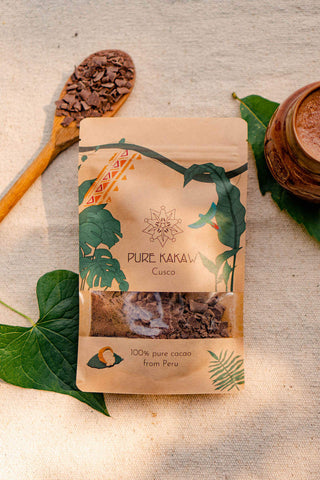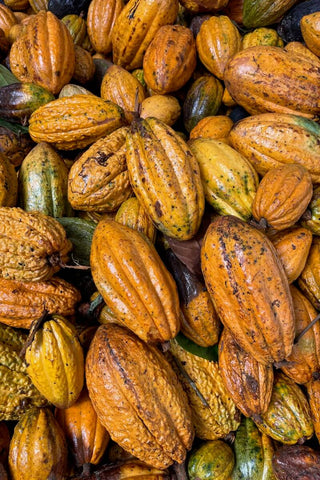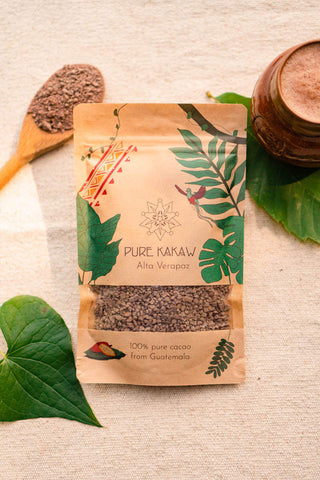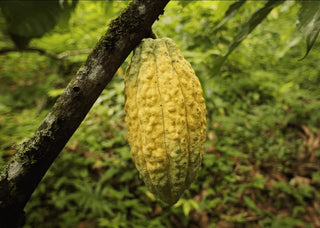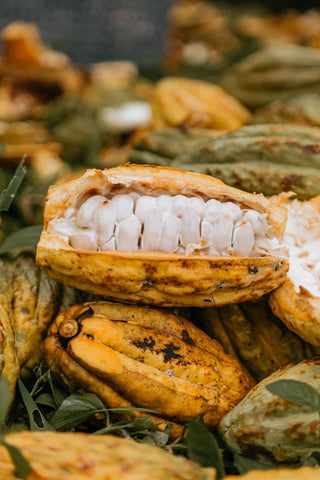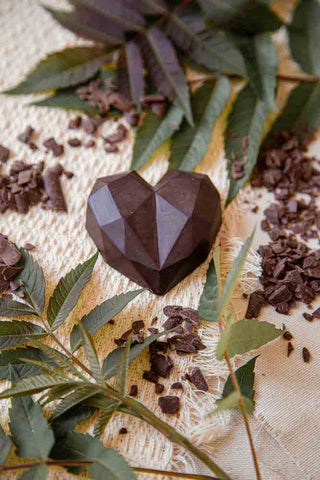

Beautiful rituals deserve transparency. Don’t just buy the story, check what’s actually in your cup.
Ceremonial cacao has become a phrase you see everywhere: yoga studios, wellness shops, retreats, breathwork sessions, meditation circles, online stores, and beautifully designed packaging. It sounds meaningful. It sounds ancient. It sounds like quality.
Truth is: “ceremonial cacao” is not an official quality standard.
It’s not a protected term. It does not guarantee a specific origin, variety, processing method, ethical sourcing model, nutritional value, or flavor profile. It can mean something beautiful. It can also mean very little.
And that matters. Because cacao is more than a wellness trend. It’s a plant with a long cultural history, a complex chemistry, a deep place in ritual, and rich flavors that have drawn people to it for centuries.
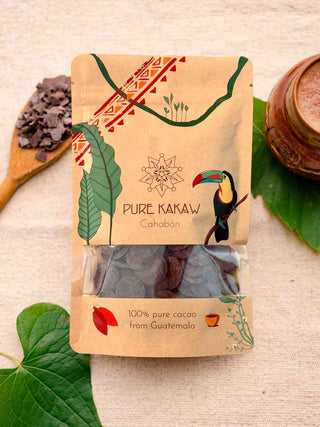
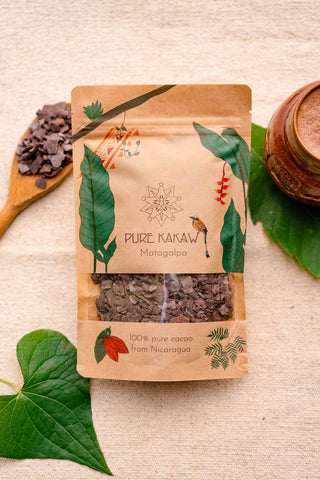
At Pure Kakaw we believe beautiful plant medicine and rituals deserve more than clever branding, they deserve transparency (hence our name).
From sacred drink to marketing language
Cacao has been used for thousands of years, especially within Mesoamerican cultures, where it was valued as a sacred drink and used in ceremonies, offerings, feasts, and gatherings.
In The History of Cacao, you can read more about cacao’s rich history and its deep connection to ritual, mythology, hospitality, and even currency. In many cultures, cacao was not simply consumed; it was shared, offered, prepared, and honoured.
That history is part of why cacao feels different from many other foods. A cup of pure cacao can hold warmth, focus, nourishment, and connection. It can support meditation, breathwork, creative practice, or a quiet morning ritual. But the fact that cacao has a ceremonial history does not mean every product labelled “ceremonial” today carries that same depth.
This is where things become confusing.
In the modern wellness market, “ceremonial cacao” often suggests high-end prices, purity, authenticity and spiritual value. Sometimes that is true. Sometimes it is mostly marketing.
So what is ceremonial cacao?
At its best, ceremonial cacao usually refers to 100% cacao paste: whole cacao beans that have been fermented or washed, dried, lightly roasted (or unroasted), peeled, and ground into a paste. Nothing is extracted. Nothing is added. The cacao butter is still naturally present, which gives the drink its creamy texture and satisfying body.
This is very different from cacao powder. Cacao powder is made by pressing much of the cacao butter out of the paste. What remains is processed into powder. That can still be delicious and useful (especially for baking or smoothies), but it’s not the same as whole cacao paste for drinking.
This is why we named our project Pure Kakaw, some time before the ceremonial cacao boom: it’s clearer, more honest, and more focused on what the product actually is. Pure cacao means the whole cacao bean is preserved as much as possible; without sugar, milk powder, or unnecessary additives and without extracting the natural fats.
That may sound less mystical than “ceremonial cacao”, but it tells you more.
“Raw cacao” is another confusing term
The cacao world also loves the word “raw”. But truly raw cacao is rare and often the term is simply not accurate.
During fermentation, cacao beans can naturally reach temperatures around 50°C. Sun drying, grinding, and preparing cacao as a warm drink can also exceed the temperatures often used to define raw food (the most widely accepted threshold in the raw food community is 42°C). In that case, “unroasted” is usually a more accurate word than “raw”, even if it sounds less appealing on a label.
This does not mean raw or unroasted cacao is bad. It simply means language matters.
A word can create an expectation. And when a word suggests health, purity, or superior quality, it should be used with care.
Why “ceremonial” does not automatically mean better
A cacao can be called ceremonial and still be low quality. It can be overpriced. It can be poorly sourced. It can be mixed with sugar or flavorings. It can even be cacao powder marketed as something more special than it is.
The word itself does not tell you where the cacao comes from, what the origin is, how it was fermented, at which temperature it was roasted, if anything was added, if the farmers are paid fairly, how the flavor is, and even if it's paste or powder.
The central point is: don’t buy the story alone. Look at the substance cause even being a high-end product and a unique variety, it can still be priced fairly and honestly.
Good cacao does not need exaggerated claims It can be poetic and transparent at the same time.
What should you check before buying ceremonial cacao?
A good cacao brand should make it easy to understand what is in your cup. Here’s a simple checklist:
- Ingredients: ideally, for a pure cacao drink, it should say one thing: 100% cacao (no sugar, no additives, no vague “blends” hiding behind romantic language).
- Form: is it cacao paste / cacao mass (whole ground cacao), or cacao powder? Both have their place, but they are not the same product.
- Origin: does the brand tell you where it comes from? A country is a start, but region, cooperative, or sourcing partner is better. (Like coffee or wine, cacao carries the character of its origin.)
- Processing: fermentation and roasting are not enemies of quality. Fermentation is essential for flavor development, and light roasting has been used traditionally. In About Raw & Ceremonial Cacao, you can read more about traditional roasting of cacao, and how it can help develop flavor, improve peeling, and support food safety.
- Taste: quality isn’t only an idea, you can smell it, feel it in the texture, and taste depth (bitterness, fruitiness, nuttiness, acidity, softness). Good cacao has character.
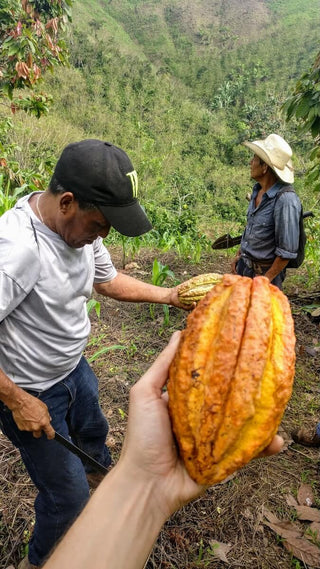
For example, through Pure Kakaw we always wanted to share as much as possible about the origins. Include the farmers in a more fair and holistic direct trade and partnerships. Where also ecological protection is included in how we choose and source unique cacaos.
Science and ritual can belong together
There is a tendency to split cacao into two worlds. On one side: science, nutrition, chemistry. On the other: ritual, heart, ceremony, feeling.
But cacao has always lived in both.
It contains minerals, natural fats, flavanols, and active compounds such as theobromine. It can feel gently stimulating, focusing, and mood-lifting for many people. At the same time, the way we drink it matters: slowly, intentionally, with attention.
A cacao ritual is not powerful only because of the cacao. And it is not powerful only because of the ceremony. It is the meeting point between plant, body, context, culture and active presence.
That is where the real depth lives.
Not in inflated claims. Not in vague promises. Not in pretending cacao is a miracle cure.
But in the simple fact that a warm, bitter, nourishing drink can help us pause. Feel. Gather. Listen. Create. Connect.
Reclaiming beauty from hype
The problem is not that people use cacao in ceremony. That can be beautiful. The problem is when ceremonial language is used to hide a lack of clarity.
Because wonder does not need to be vague. Ritual does not need to be unscientific. A beautiful story does not excuse a poor product.
In fact, the more meaningful the ritual, the more important the transparency.
If cacao is sacred, then we should care where it comes from. If it is used in ceremony, then we should care how it is grown, processed and shared. If we speak about heart-opening, then we should also speak about farmers, sustainability, fermentation, ingredients and flavor.
That is not less spiritual. It is more grounded.
What should you ask for choosing pure cacao?
Save this list. Because instead of simply searching for ceremonial cacao, these are the questions actually worth asking:
- Is this 100% cacao?
- Is it paste or powder?
- Where does it come from?
- What has been added or removed?
- How is it processed?
- Is the brand transparent?
- And more subjectively, how is the flavor to you?
Ceremonial cacao can be a useful term when it helps people understand that cacao can be prepared as a drink and enjoyed with intention. But it should not be mistaken for a quality certificate.
A more transparent cacao future
The future of cacao does not need more mystification or inflated marketing. It deserves more transparency, better sourcing, and deeper research. Because there is still so much to discover about this extraordinary plant. Its history, flavour, chemistry, cultural roots, and effects go far beyond trends. And maybe that is exactly what makes cacao truly special.